
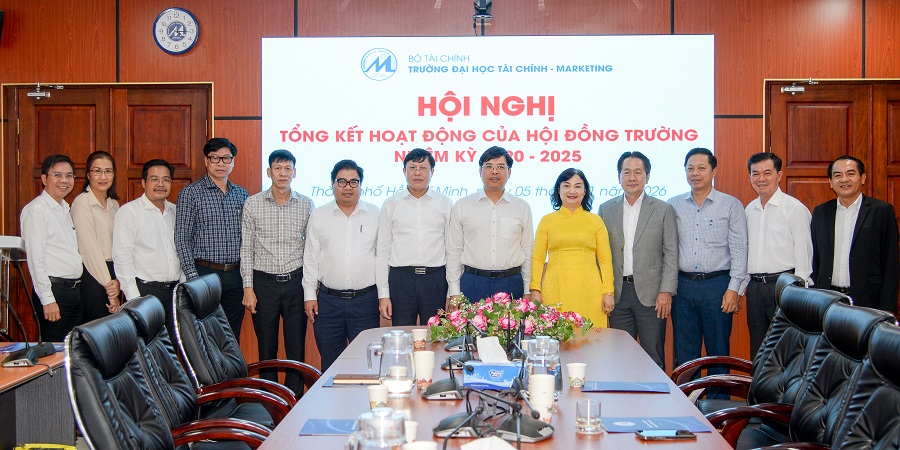
UFM University Council Concludes the 2020–2025 Term
On January 5, 2026, the University of Finance and Marketing (UFM) held a conference to review the performance of the University Council for the 2020–2025 term. This conference carried special significance, marking the conclusion of an important phase in the University’s governance model, in the context of fundamental changes in the legal framework governing higher education.
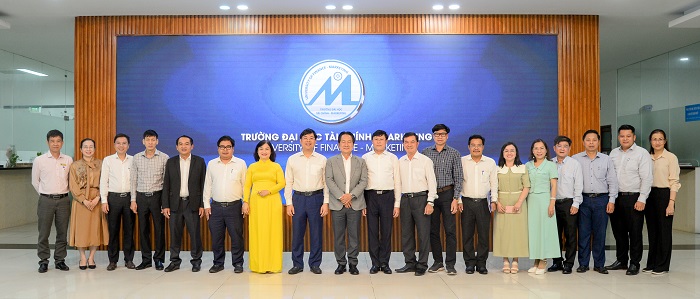
The conference was chaired by Assoc. Prof. Dr. Phạm Tiến Đạt, Secretary of the Party Committee and President of the University. Attending the conference were members of the University Council for the 2020–2025 term, the Board of Management, and leaders of units and mass organizations across the University.
The conference was held against the backdrop of the National Assembly’s passage, on December 10, 2025, of the amended Law on Higher Education and the Law on Vocational Education. Under the provisions of these two laws, effective January 1, 2026, university councils of public higher education institutions and councils of public vocational education institutions officially cease operation. Therefore, the conference was not only a review of the term but also an opportunity to comprehensively reflect on the role, contributions, and lasting impact of the UFM University Council throughout the 2020–2025 period.
Rather than merely reviewing completed tasks, the conference focused on assessing how the University Council fulfilled its role as a higher education governance body—providing strategic direction, overseeing operations, issuing key resolutions, and ensuring principles of transparency, democracy, and consensus in governance. Reports and discussions were developed based on data and practical implementation outcomes, thereby clarifying the level of completion of work programs in each phase, while also identifying areas requiring further improvement to enhance the effectiveness of the University’s operations.
Many opinions expressed at the conference emphasized the spirit of “evaluation for improvement,” candidly identifying limitations, analyzing their causes, and proposing recommendations for adjustment. This approach contributed to the formation of a continuous feedback mechanism in governance, aiming toward a more stable, flexible, and adaptive management model in response to the demands of higher education reform.
In summarizing the 2020–2025 term, the conference acknowledged numerous foundational achievements, reflected not only in the fulfillment of assigned tasks but also in the gradual elevation of governance standards. Throughout the term, the UFM University Council was recognized for effectively fulfilling its role as a key institution ensuring transparency and consensus in university governance, while closely accompanying the Board of Management in many major decisions, thereby strengthening organizational capacity and enhancing consistency in administration.
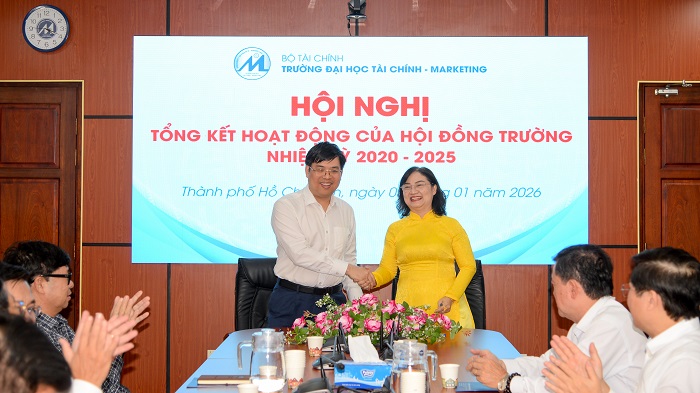
Speaking at the conference, Assoc. Prof. Dr. Phạm Tiến Đạt, Secretary of the Party Committee and President of the University, on behalf of the Board of Management, expressed sincere appreciation and profound recognition of the contributions made by the University Council during the 2020–2025 term. He emphasized that the University Council not only fulfilled its role as a vital governance body as prescribed by law, but also consistently demonstrated a strong sense of responsibility, close collaboration, and shared commitment with the Board of Management in the process of formulating and implementing major policies, contributing to the improvement of coordination mechanisms and the enhancement of UFM’s administrative effectiveness.
At the conclusion of the conference, the agreed conclusions and recommendations were affirmed as an important basis for ensuring continuity and consistency in governance, particularly as UFM enters 2026 with new operational orientations. Building on the achievements and experience of the 2020–2025 term, the University of Finance and Marketing affirms a proactive mindset, continuing to enhance overall quality, promote training and research–knowledge transfer, develop resources, and strengthen its capacity to serve learners, thereby making meaningful contributions to the community and society in the next stage of development.
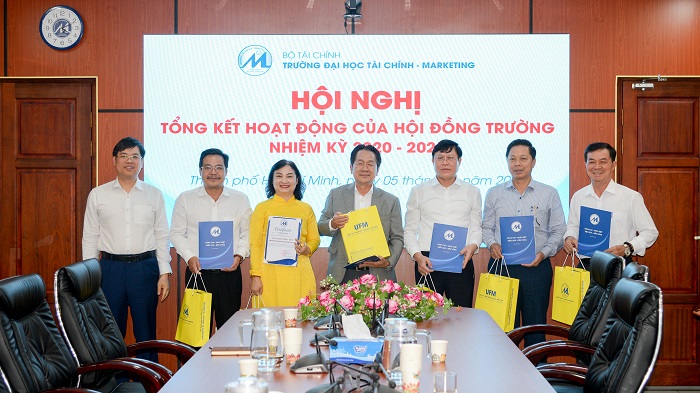
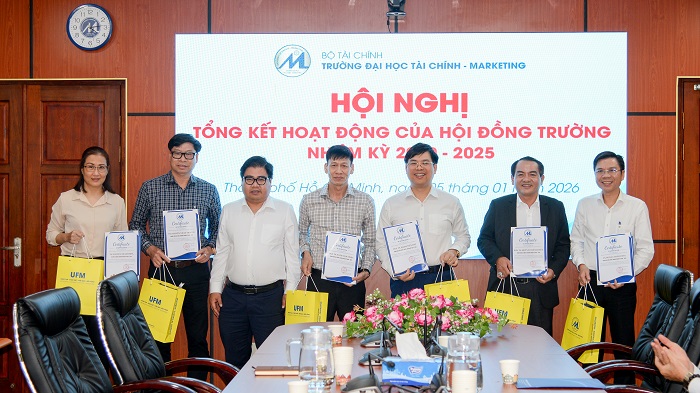
Hong Quan, Thanh Nam