
Regulations on Increasing Revenue from Science, Technology and Innovation: Requirements for Lecturers and Higher Education Institutions
In the context of university autonomy and the transformation of development models, the University of Finance – Marketing (UFM) has placed special emphasis on promoting activities aimed at increasing revenue from science and technology (S&T) and innovation. This is not only a strategic orientation of the University, but also a mandatory requirement under State regulations applicable to higher education institutions.
According to Circular No. 01/2024/TT-BGDĐT issued in 2024 by the Ministry of Education and Training on higher education institution standards, S&T and innovation activities are identified as one of the core criteria for assessing the quality and operational effectiveness of higher education institutions. In particular, with regard to finance and research, the Circular requires universities to generate revenue from science and technology activities. Specifically, “the proportion of revenue from science, technology and innovation in the total revenue of a higher education institution… shall be no less than 5%.” This provision indicates that the State has shifted from encouragement to the establishment of a mandatory threshold, ensuring that universities actively promote S&T research in connection with the commercialization of research outcomes and the development of S&T services.
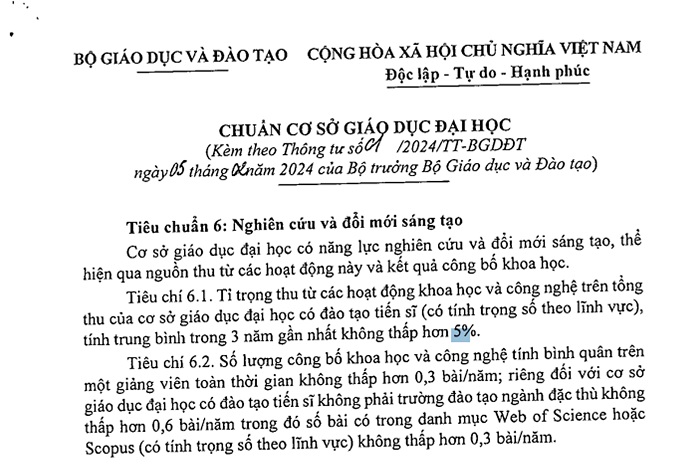
Circular No. 01/2024/TT-BGDĐT issued in 2024 by the Ministry of Education and Training on higher education institution standards
The urgency of this issue is further emphasized in Government Decree No. 91/2026/NĐ-CP, issued in 2026, guiding the implementation of the Law on Higher Education. The Decree stipulates that higher education institutions must increase the proportion of revenue from S&T and innovation activities in their total revenue, while expanding the scope of revenue-generating activities, including commissioned research, technology transfer, provision of S&T services, and exploitation of intellectual property assets.
In addition, under the 2025 Law on Science, Technology and Innovation, Law No. 93/2026/QH15, revenue from S&T is not limited to research projects, but is broadened to include: technology and solution transfer; consulting, training and commissioned research services; commercialization of intellectual property assets; product development cooperation with enterprises; and market-oriented innovation activities. These are the foundational activities and mechanisms that enable universities to move from a model of “academic research” to that of a “value-creating university.”
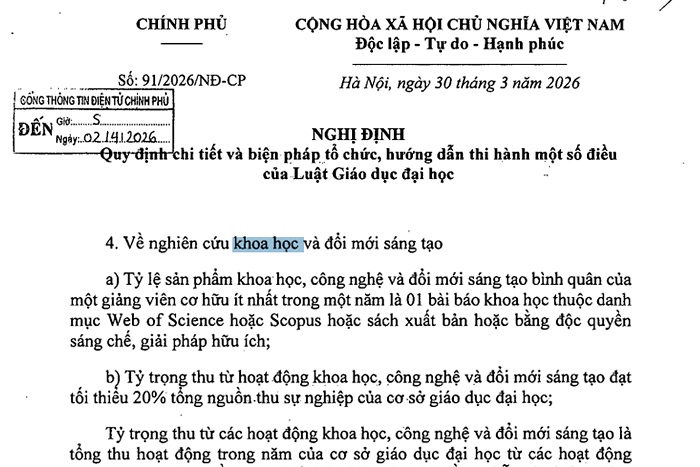
Government Decree No. 91/2026/NĐ-CP issued in 2026 guiding the implementation of the Law on Higher Education
At the same time, the current trend in national governance is moving strongly toward the application of corporate governance principles in the public sector, as reflected in approaches such as New Public Management and New Public Governance. Accordingly, the public sector no longer operates solely according to administrative logic, but increasingly focuses on effectiveness, efficiency and value creation, similar to enterprises.
Public non-business units, including universities, are required to shift from process-based management to result-based management, associated with performance measurement, accountability, optimization and diversification of resources. This places a requirement on universities to organize teaching and S&T activities as “products” capable of generating real value and revenue.
This trend is also fully consistent with international practices. Universities around the world apply performance-based evaluation systems, in which revenue from research, technology transfer and research cooperation with enterprises is an important criterion. Notably, these indicators are used not only for assessment, but also directly as a basis for allocating income and resources, creating strong motivation to link academic activities with the market. Therefore, universities are not only places of training and research, but also economic actors within the national innovation ecosystem, contributing to the creation of economic value.
For universities in the fields of economics and social sciences, research products are not necessarily core technologies, but rather applied solutions in governance, finance, marketing, digital transformation and service development. Therefore, S&T transfer does not necessarily mean technology transfer in the traditional sense, but the transfer of models, solutions and knowledge systems that can be directly applied in practice. This opens up significant potential for revenue development if such activities are organized in a market-oriented and innovation-driven manner.
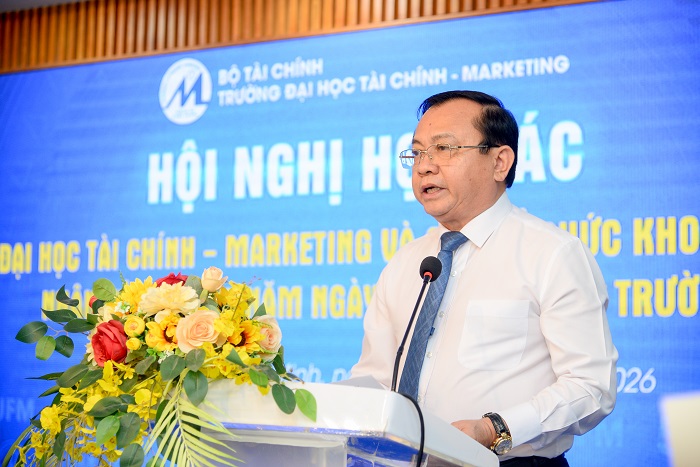
Deputy Minister of Finance Le Tan Can delivered a directive speech, emphasizing that higher education institutions need to proactively expand linkages, integrate resources, and strengthen connections with research institutes, enterprises and the realities of the economy.
This context requires a comprehensive transformation in awareness, mindset, approach and responsibilities among university lecturers, specifically as follows:
First, designing research toward productization. Each research project should be shaped from the outset as a solution package that is applicable, deployable and scalable in practice.
Second, proactively and dynamically connecting with partners and seeking cooperation opportunities. Lecturers should not passively wait for assigned topics or commissioned tasks, but need to actively approach enterprises, localities and organizations; participate in forums and networks; identify practical needs; and formulate research ideas grounded in real-world demands.
Third, developing solution-oriented creativity. Lecturers should not only analyze problems, but also propose new models, tools and approaches that are flexible and suitable to the specific contexts of enterprises and localities, while being willing to test new ideas through pilot projects.
Fourth, improving consulting and practical implementation capacity. Lecturers need to be equipped with skills in working with enterprises, designing solutions, presenting, negotiating and managing projects, thereby transforming knowledge into valuable products.
Fifth, actively participating in the University’s innovation ecosystem. Lecturers should engage in Innovation Hubs, interdisciplinary groups, and cooperation projects with enterprises and localities, acting as co-creators rather than merely independent researchers.
Sixth, accepting experimentation and controlled risks. Innovation is associated with the ability to accept failure within permissible limits, thereby accumulating experience and improving solutions, instead of pursuing only “safe” research aimed at publication.
Seventh, measuring effectiveness based on value created. Evaluation should shift from being based primarily on the number of publications to indicators such as the number of consulting contracts, technology transfer revenue, enterprise satisfaction, and social impact.
In summary, the requirement to increase revenue from S&T and innovation is a mandatory strategic orientation arising from State management requirements, modern public governance trends and international practices. Timely adaptation will not only help higher education institutions enhance their financial autonomy, but also affirm their role as knowledge centers capable of generating value for the economy and society.
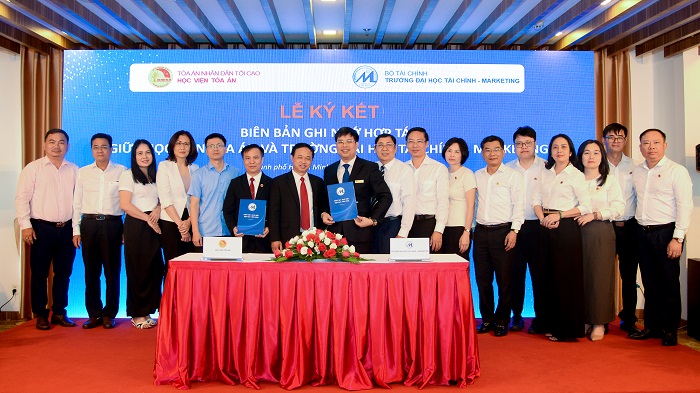
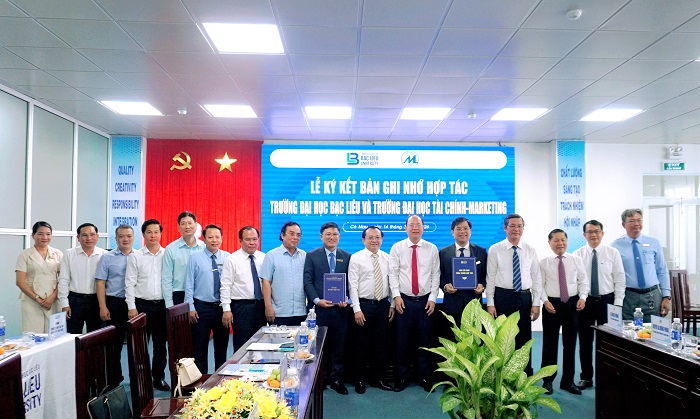
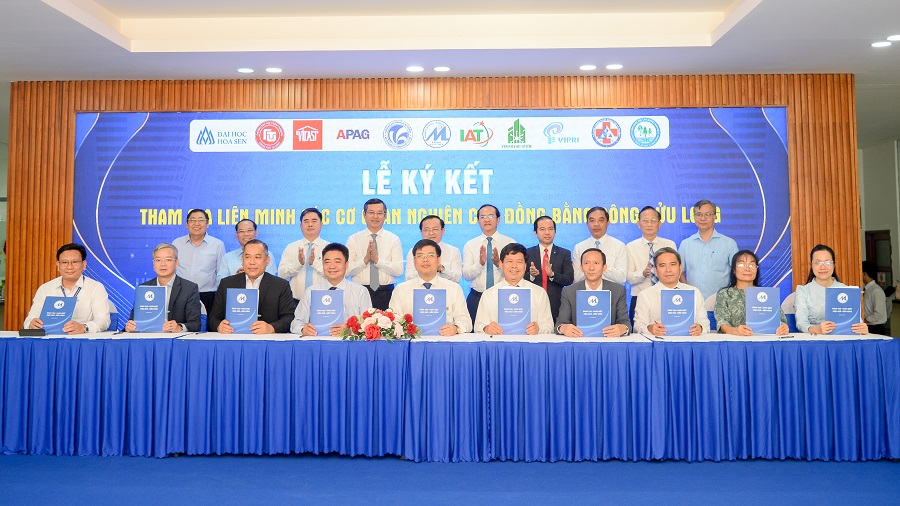
UFM has strengthened cooperation agreements with various partners in recent years.
The development trend of universities in Vietnam in general, and in the southern region in particular, from the very first year of the new era — the era of national rise — is to expand the scale and improve the quality of training; increase the size and quality of lecturers and researchers; promote international integration; renew growth models through endogenous resources and university mergers in line with the guidelines of the Party and the Government; and, at the same time, innovate revenue growth.
Accordingly, strengthening and creating breakthroughs in S&T research activities, especially research and the transfer of applied S&T products for social development and the increase of revenue from S&T and innovation, is an urgent requirement. This calls for continued improvement and fundamental, creative, proactive, timely and relentless breakthroughs in implementation methods.
Higher education institutions must act with strong determination, great effort and decisive action, while allocating adequate resources to these activities. At the same time, they need to create a favorable and scientifically ethical environment in order to mobilize and promote the potential strength of lecturers, researchers, experts, scientists and learners both inside and outside the university, as well as those from research institutions, agencies, organizations and enterprises.
Department of Scientific Management